
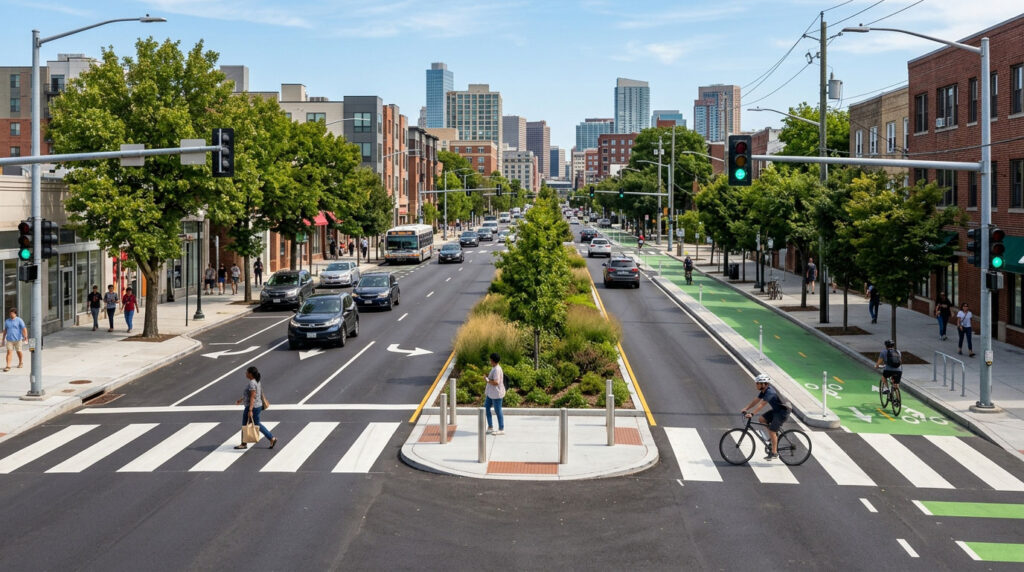
What makes a road safe is more than fresh pavement or a low crash count. It is a transportation environment designed to prevent predictable conflicts, reduce the severity of mistakes, and serve everyone who uses it. Drivers, passengers, pedestrians, cyclists, motorcyclists, transit riders, road workers, and emergency responders all depend on the same system.
This question is especially timely in 2026. The U.S. Department of Transportation’s National Roadway Safety Strategy emphasizes safer people, safer roads, and safer vehicles. It also calls for evidence-based road design, better nighttime visibility, improved traffic management, and stronger crash response. Those priorities show that road safety is created through several overlapping layers rather than one feature alone.
What Makes a Road Safe?
A safe road helps people understand what to do, gives them enough time and space to do it, and limits the harm caused when something goes wrong. Its design should match the way the road is actually used. A neighborhood street, a rural highway, a school-zone crossing, and a busy commercial arterial face different risks, so they should not all be designed in the same way.
The Safe System Approach Anticipates Human Error
The Federal Highway Administration’s Safe System approach starts with a practical reality: people make mistakes, and the human body has limited tolerance for crash forces. Instead of relying only on perfect behavior, the system should create multiple layers of protection. Safe road users, safe vehicles, safe speeds, safe roads, and effective post-crash care work together so that one mistake is less likely to become a fatal or life-changing event.
Safety Is Shared Rather Than Assigned to One Person
Drivers remain responsible for following traffic laws and paying attention. However, transportation agencies, road designers, vehicle manufacturers, contractors, and emergency services also influence safety. Clear lane layouts, appropriate speed limits, visible crossings, reliable traffic signals, well-maintained surfaces, and safer vehicles can all reduce risk before a driver must react.
Road Design Features That Reduce Risk
Speed Management Must Match the Surroundings
Speed affects stopping distance, reaction time, and the amount of energy transferred in a collision. A safe road does more than display a speed-limit sign. Its width, curves, intersection spacing, roadside activity, and visual cues should encourage speeds that fit the environment. A broad, straight roadway may unintentionally invite higher speeds even when homes, shops, bus stops, or crossings are nearby.
Good Design Makes the Expected Behavior Obvious
Features such as narrower travel lanes in appropriate settings, raised crossings, roundabouts, median islands, gateway treatments, and well-placed curves can make a lower-speed environment easier to recognize. On higher-speed roads, median barriers, rumble strips, clear zones, turn lanes, and enhanced curve markings can help prevent roadway-departure and head-on crashes. The correct treatment depends on traffic volume, road function, surrounding land use, and documented risk.
People Need Safe Places to Cross and Travel
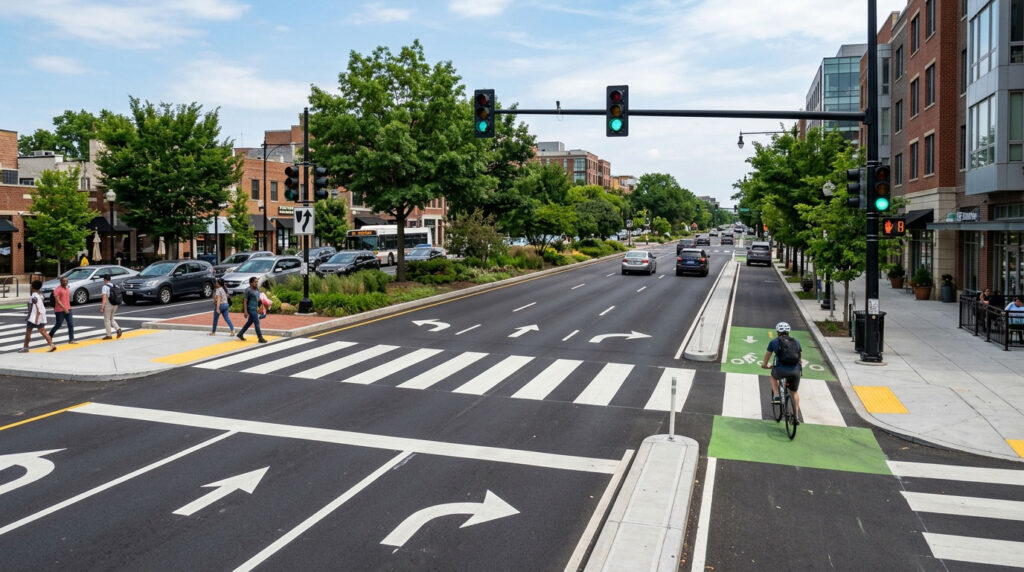
A painted crosswalk may not be enough on a wide, fast, multilane road. Safer crossings may also use better lighting, advance markings, pedestrian signals, refuge islands, curb extensions, or flashing beacons. FHWA’s guidance on crosswalk visibility enhancements explains that parked vehicles, poor lighting, and roadway curves can make people harder to see. Separating bicycle traffic from fast-moving vehicles can also reduce exposure and make movements more predictable.
Accessibility is part of safety as well. Curb ramps, detectable warning surfaces, sufficient crossing time, smooth walkways, and accessible pedestrian signals help children, older adults, wheelchair users, and people with visual or mobility limitations navigate the road environment.
Visibility and Predictability Prevent Surprise
Road users need to see lane lines, signs, signals, curves, stopped traffic, pedestrians, and obstacles early enough to respond. Lighting is particularly important at intersections, crosswalks, transit stops, and locations with a history of nighttime crashes. Markings should remain reflective, signs should not be blocked by vegetation, and sight lines should be preserved near driveways and corners.
Predictability also matters. Sudden lane drops, confusing turn paths, inconsistent signs, closely spaced driveways, and poorly timed signals can create conflicts. FHWA’s collection of Proven Safety Countermeasures includes treatments for intersections, pedestrian crossings, roadway departures, lighting, pavement friction, access management, and other common risks.
Why Arterial Roads Are a Major Safety Focus
Commercial arterials often combine several difficult conditions: multiple lanes, higher speeds, frequent driveways, turning traffic, bus stops, long crossings, and people walking or cycling near vehicles. According to the 2026 National Roadway Safety Strategy, more than half of traffic deaths occur on arterial roads even though arterials account for about 10 percent of the public road network. The same strategy reports that more than half of fatalities occur at night, although only about one-quarter of travel happens during darkness.
These figures help explain the current focus on speed management, lighting, access management, intersection design, and safer pedestrian facilities along busy corridors. Improving an arterial does not always require a complete reconstruction. Signal timing changes, refreshed markings, turn restrictions, better lighting, refuge islands, and targeted crossing improvements can address specific problems when supported by engineering analysis.
Maintenance, Data, and Operations Matter
A Safe Design Must Remain Safe Over Time
Even a well-designed road can become hazardous when pavement deteriorates, drainage fails, vegetation blocks sight lines, markings fade, or signals malfunction. Potholes and low pavement friction can affect vehicle control, while standing water can increase hydroplaning risk. Regular inspection and timely maintenance are therefore part of road safety, not merely appearance.
Road Safety Audits Find Risks Before or After Construction
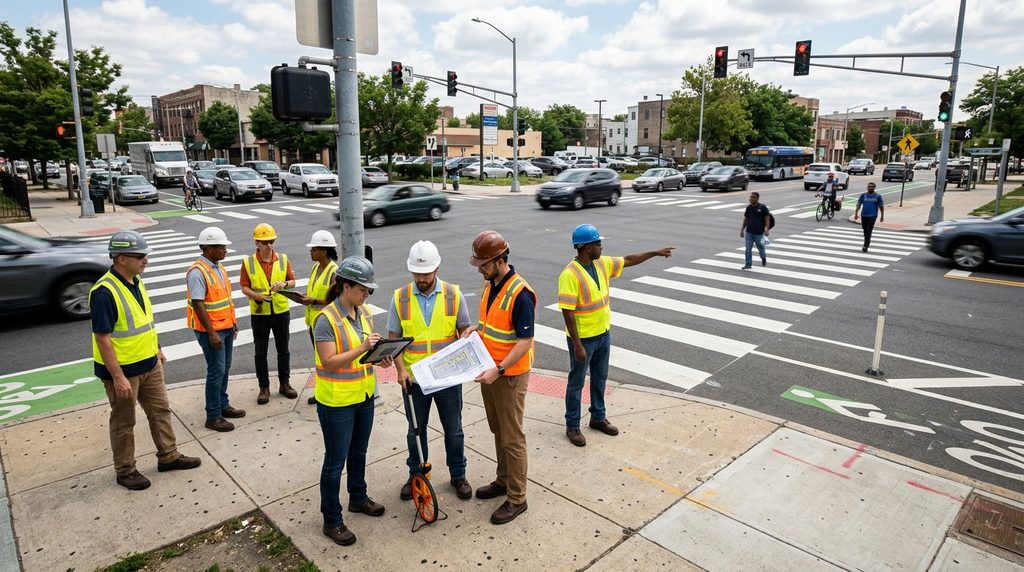
A Road Safety Audit is an independent, multidisciplinary review of an existing or planned road. The team considers all road users, human factors, and opportunities for improvement. Audits can identify issues during planning, design, construction, or operation, allowing agencies to act before a pattern of severe crashes develops.
Crash records remain important, but agencies can also examine traffic speeds, near misses, pedestrian activity, complaints, roadway condition, and recurring conflicts. A road should not need to accumulate fatalities before a foreseeable problem receives attention.
Drivers and Safer Vehicles Complete the System
Infrastructure cannot eliminate every risk. Drivers still need to manage speed, avoid distraction and impairment, use seat belts, yield appropriately, and adjust to weather or visibility. NHTSA’s Pathways to Safer Streets highlights speeding, impairment, distraction, and lack of restraint use as major behavioral priorities.
Vehicle design adds another layer. Electronic stability control, automatic emergency braking, lane-support features, stronger occupant protection, and crash-notification systems may prevent certain collisions or lessen their consequences. These technologies are helpful safeguards, but they do not replace attentive driving or sound roadway design.
How Road Users Can Recognize a Safer Road
No single feature proves that a road is safe. Look for a combination of characteristics: speeds that fit the surroundings, clearly marked lanes, adequate sight distance, visible and accessible crossings, protected space where needed, understandable intersections, good lighting, maintained pavement, safe roadsides, and room for emergency response. The road should remain reasonably understandable during rain, darkness, congestion, and construction—not only under ideal conditions.
Ultimately, what makes a road safe is resilience. The system expects mistakes, reduces opportunities for conflict, controls dangerous impact energy, and provides backup protections when one layer fails. Continue exploring the Road Observer articles for practical explanations of driving behavior, road design, vehicle technology, and changing road conditions.